

Chinese Size to US, EU & UK Conversion Charts (2026) — Clothing, Shoes & Rings
Convert Chinese sizes to US, EU & UK for clothing, shoes, and rings. Quick charts, fit tips, and measurement guides for every category. Updated for 2026.
You found the perfect sneakers on AliExpress. The listing said “Size 40.” You thought that meant EU 40 — the same size you wear in Nike or Adidas. The shoes arrived. They were tight. Your toes hit the front. You checked the insole — it was almost 10 mm shorter than your usual EU 40.
This is one of the most common complaints from people who buy shoes from China. Chinese sizes and EU sizes often look the same on paper, but they are not always the same in practice.
This guide gives you three accurate conversion charts (Men’s, Women’s, and Kids’), a simple method to measure your feet at home, and the key mistakes to avoid — so you get the right fit the first time.
All sizing data in this article is based on China’s national standard GB/T 3293.1 and the international Mondopoint system (ISO 9407), cross-referenced with major brand charts. Individual brands may still vary by about ±0.5 size.
This guide focuses specifically on shoes. For a quick overview of all Chinese sizing categories — including clothing and rings — visit our complete Chinese size conversion hub.
When you buy shoes from China, you will see numbers on the shoe label. But there are two different ways Chinese factories write these numbers. You need to know both so you do not end up with the wrong size.
The Old Sizing
You can still find this old system on older brands or at small street markets in China. The numbers look like 39, 40, or 41. They look exactly like European (EU) sizes, but they are not the same. The old system uses a different formula — Old CN = 2 × foot length in cm − 10 — which means it increases faster than EU sizing as foot length grows.
The New Sizing — Mondopoint / GB/T 3293.1 (defined by ISO 9407)
This is the current recommended national standard in China. It uses the Mondopoint system, which is an international method that measures the straight length of the foot in millimeters (mm). Because of this, new labels show the foot length directly. For example, if the label says “245,” it means the shoe is designed for a foot that is approximately 245 mm long. (Note: the shoe’s interior will be slightly longer than 245 mm to include toe room.)
Why this matters: If you do not know which system the label is using, your size conversion could be off. You might end up with a shoe that is too big or too small.
Many sizing websites tell you that a Chinese size is the same as an EU size. This can be misleading, especially with older or unbranded shoes.
Here is why: the Old Chinese formula (2 × cm − 10) and the EU formula (1.5 × (cm + 2)) have different rates of increase. Around 250 mm of foot length, both systems happen to land near “40.” But at 270 mm, Old CN gives you 44, while EU gives you only 43. At 280 mm, the gap widens further — Old CN 46 vs EU 44.5. So a shoe labeled “Old CN 44” fits a roughly 270 mm foot, but a real EU 44 fits a roughly 280 mm foot. That is a 10 mm difference — enough to make the shoe feel painfully tight.
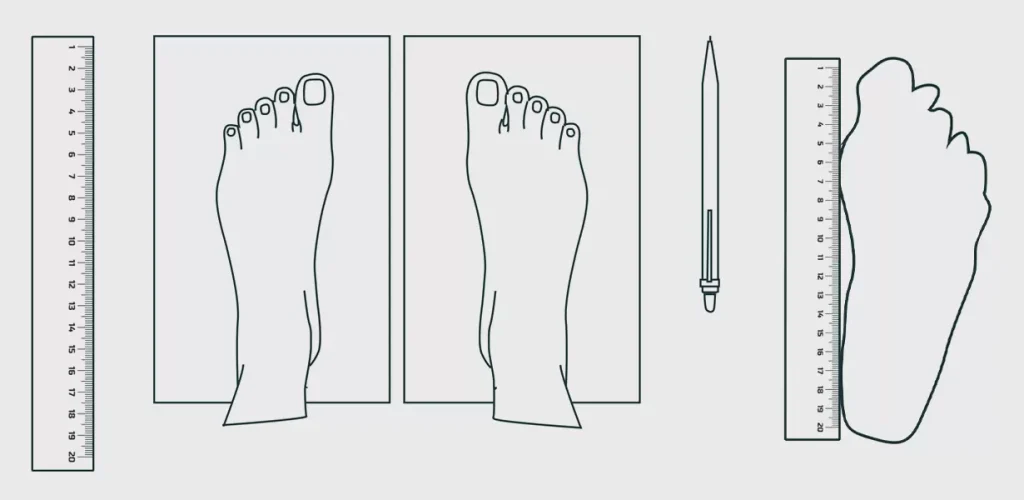
Before you convert to a Chinese shoe size, you need to know your foot length as accurately as possible. Here is a simple way to measure at home.
Tips:Copy and paste this 5-step guide onto your Shopify product page to lower your refund rate.
Finding the right length is only half the job. You also need to think about foot width.
The official Chinese standard GB/T 3293.1 also accounts for foot width (how wide your foot is from side to side). But most sellers on websites like AliExpress or Temu only show the length number on their product pages.
This is a common problem. If you have wide feet, a shoe might be long enough, but it will still squeeze your toes and feel uncomfortable. This is one reason why many people feel Chinese shoes run small — it is often a width issue, not just a length issue.
Pro Tip: How do you know if you have wide feet? In physical shoe stores, staff use a metal measuring board called a Brannock device. For men, the standard width is D — so E or wider means you have wide feet. For women, the standard width is B — so D or wider already counts as wide. If you have wide feet and the Chinese seller does not offer width choices, consider choosing half a size bigger. This gives the sides of your feet more room.
Here are the main tables to help you convert Chinese shoe sizes to European (EU), US, and UK sizes.
The numbers in these tables are based on GB/T 3293.1 and ISO 9407. Both standards measure the straight length of the foot in millimeters (mm) to determine the correct size. Values are cross-referenced with major brand charts (Nike, Adidas) and rounded to the nearest half-size like most stores do.
How to use this table: Find your foot length in millimeters (mm) on the left. Then look across the row to find your size in each system.
| Foot Length (mm) | CN New (Mondopoint) | CN Old (旧码) | EU | US Men’s | UK |
|---|---|---|---|---|---|
| 240 | 240 | 38 | 39 | 6 | 5.5 |
| 245 | 245 | 39 | 39.5 | 6.5 | 6 |
| 250 | 250 | 40 | 40 | 7 | 6.5 |
| 255 | 255 | 41 | 40.5 | 7.5 | 7 |
| 260 | 260 | 42 | 41.5 | 8 | 7.5 |
| 265 | 265 | 43 | 42 | 9 | 8 |
| 270 | 270 | 44 | 43 | 9.5 | 8.5 |
| 275 | 275 | 45 | 44 | 10 | 9 |
| 280 | 280 | 46 | 44.5 | 10.5 | 9.5 |
| 285 | 285 | 47 | 45.5 | 11 | 10.5 |
| 290 | 290 | 48 | 46 | 12 | 11 |
| 295 | 295 | 49 | 47 | 12.5 | 11.5 |
| 300 | 300 | 50 | 48 | 13 | 12 |
| 305 | 305 | 51 | 48.5 | 14 | 13 |
| 310 | 310 | 52 | 49.5 | 15 | 14 |
Notice how the CN Old and EU columns start out close together at 250 mm (both around 40), but by 280 mm, CN Old is 46 while EU is only 44.5. This is the “EU = CN” trap in action.
Quick answers:
How to use this table: Find your foot length in mm first. Some Chinese women’s shoes may feel narrow on the sides. If you have wide feet, consider choosing half a size bigger than what the table shows.
| Foot Length (mm) | CN New (Mondopoint) | CN Old (旧码) | EU | US Women’s | UK |
|---|---|---|---|---|---|
| 220 | 220 | 34 | 35.5 | 5 | 3 |
| 225 | 225 | 35 | 36 | 5.5 | 3.5 |
| 230 | 230 | 36 | 37 | 6 | 4 |
| 235 | 235 | 37 | 37.5 | 6.5 | 4.5 |
| 240 | 240 | 38 | 38 | 7.5 | 5 |
| 245 | 245 | 39 | 39 | 8 | 6 |
| 250 | 250 | 40 | 40 | 8.5 | 6.5 |
| 255 | 255 | 41 | 40.5 | 9.5 | 7 |
| 260 | 260 | 42 | 41.5 | 10 | 7.5 |
| 265 | 265 | 43 | 42 | 10.5 | 8 |
| 270 | 270 | 44 | 43 | 11 | 9 |
How to use this table: Kids’ feet grow fast. Consider adding 5 to 10 mm to the measured foot length before checking this chart — this replaces the comfort room from Step 5 above and also leaves space for growth. “C” = Child sizes, “Y” = Youth sizes (typically age 7+).
| Foot Length (mm) | CN New (Mondopoint) | CN Old (旧码) | EU | US Kids | UK Kids |
|---|---|---|---|---|---|
| 110 | 110 | 12 | 18.5 | 4C | 3 |
| 115 | 115 | 13 | 19 | 4.5C | 3.5 |
| 120 | 120 | 14 | 20 | 5C | 4 |
| 125 | 125 | 15 | 21 | 5.5C | 4.5 |
| 130 | 130 | 16 | 21.5 | 6C | 5 |
| 135 | 135 | 17 | 22 | 6.5C | 5.5 |
| 140 | 140 | 18 | 23 | 7C | 6 |
| 145 | 145 | 19 | 24 | 7.5C | 6.5 |
| 150 | 150 | 20 | 25 | 8.5C | 7.5 |
| 155 | 155 | 21 | 25.5 | 9C | 8 |
| 160 | 160 | 22 | 26.5 | 9.5C | 8.5 |
| 165 | 165 | 23 | 27 | 10C | 9 |
| 170 | 170 | 24 | 28 | 11C | 10 |
| 175 | 175 | 25 | 29 | 11.5C | 10.5 |
| 180 | 180 | 26 | 30 | 12C | 11 |
| 185 | 185 | 27 | 30.5 | 12.5C | 11.5 |
| 190 | 190 | 28 | 31 | 13C | 12 |
| 195 | 195 | 29 | 32 | 13.5C | 12.5 |
| 200 | 200 | 30 | 33 | 1Y | 13 |
| 205 | 205 | 31 | 33.5 | 1.5Y | 13.5 |
| 210 | 210 | 32 | 34 | 2Y | 1 (Youth) |
| 215 | 215 | 33 | 35 | 2.5Y | 1.5 (Youth) |
| 220 | 220 | 34 | 35.5 | 3Y | 2 (Youth) |
Note: The gap between CN Old and EU is largest in kids’ sizes. For example, a child’s Old CN 22 is not an EU 22 — it corresponds to roughly EU 26.5. That is a 4.5 size difference. Be especially careful with children’s shoes.
Many buyers in Europe and the US say that shoes from China feel small. This is very common feedback, especially from people who buy on Pinduoduo, Taobao, or 1688.
But why does this happen? Here are the main reasons.
1. Old sizing and misleading EU labels
Many sellers use old size numbers. They put a “40” on the box and call it an EU size 40. But an old Chinese 40 corresponds to a foot length of about 250 mm, while a standard EU 40 also maps to about 250 mm. The real trouble starts at larger sizes — an Old CN 44 fits a 270 mm foot, but a real EU 44 fits a 280 mm foot. That 10 mm gap is enough to make the shoe feel painfully small. If the factory does not use the Mondopoint system, the size label can be misleading.
This “runs small” issue affects more than just shoes — Chinese clothing and ring sizes follow the same pattern. See our master sizing guide for the full picture.
2. Narrow shoe lasts
A “shoe last” is the hard, foot-shaped block (made of wood or plastic) that workers use to build the shoe around. Many Chinese shoes are made with a last that is thinner and narrower. This shape tends to fit the average foot in East Asia well. However, buyers in Europe and North America often have wider and higher-volume feet. Even if the length is correct, the narrow sides will squeeze the toes. This makes the whole shoe feel too small.
3. Quality differences in manufacturing
Sometimes, inexpensive shoes from big wholesale markets are not made to precise standards. The label might say the shoe is for a 250 mm foot. A shoe designed for a 250 mm foot should normally have an interior length of about 257–260 mm to include toe room. If the actual interior measures only 245 mm, the shoe is significantly undersized — not just a “small mistake,” but a real fit problem.
This is why a private agent like DailyFulfill does AQL checks (quality control) before shipping. We measure the real insole length to stop bad stock from reaching your customers.
4. Sock thickness differences
Many Chinese shoes are designed with thinner socks or even barefoot wear in mind. If you typically wear thicker athletic or winter socks, the shoe will feel tighter than expected. This is a small factor, but it adds up on top of the other issues.
Pro Tip: Ask for the Insole Length Do not just trust the size number on the product page. Send a message to the seller and ask: “Can you tell me the insole length in centimeters (cm) for this size?” The insole is the soft pad inside the bottom of the shoe, and its length tells you how much room the foot will actually have. This tends to be a more reliable indicator than the size number alone. Cross-check the insole length with our Chinese shoe size chart above to confirm the right size.
When shopping for shoes on Chinese websites, watch out for these warning signs. If you spot them on a product page, the sizing information may be less reliable.
🚩 Red Flag #1: The page only says “S / M / L / XL.” If a seller only uses letter sizes for shoes, proceed with extra caution. Shoe sizing needs numbers in cm or mm to match a real foot. (Exception: some casual slippers or beach sandals do use letter sizing — but for any structured shoe, insist on measurements.)
🚩 Red Flag #2: The CN size and EU size are identical across the entire chart. If every single row shows CN and EU as the same number (38=38, 39=39, 40=40, all the way through), the seller likely copied the numbers without converting them. As our chart above shows, CN Old and EU values do happen to be close at certain sizes (especially around 250 mm), but they should not be identical across all sizes.
🚩 Red Flag #3: There is no foot length in mm or cm. GB/T 3293.1 is a recommended national standard that calls for shoe sizes to reference foot length in millimeters. If the seller’s page does not include any mm or cm measurements, they may not be following recommended sizing standards — which could mean less reliable sizing.
🚩 Red Flag #4: Many reviews say “runs small” or “runs big.” Always check what other buyers say. If multiple people report sizing problems and the seller has not updated the size chart or responded to the feedback, there is a good chance you will run into the same fit issues.
🚩 Red Flag #5: The shoes have no brand and no size tags inside. Very cheap shoes from wholesale markets sometimes come without any brand name or size markings on the inside. This typically means they were made in a small factory that may not follow standardized sizing practices.
What to do if you spot a Red Flag: Seeing one or two of these flags does not necessarily mean you should walk away. Ask the seller for the insole length in cm (see our Pro Tip above) — if they can provide it quickly and it matches your foot measurement, the listing may still be fine. But if you see three or more flags on the same listing, it is probably safer to look elsewhere.
If you’re also shopping for clothing from China, the sizing rules are different but the core principle is the same — always check the cm measurements. See our Chinese clothing size charts guide for the full breakdown including the 160/84A tag system.
Still not sure about your size? Measure your foot in mm using the checklist above, then match it to our conversion charts. If you are buying from Taobao, 1688, or AliExpress, always ask the seller for the insole length — it is the single most useful number for avoiding returns.
Shopping from China does not have to be a guessing game. With the right measurements and a little careful checking, you can find shoes that fit well at a much lower price.
Want more guides like this? DailyFulfill helps you source from China with confidence — from size guidance to quality checks.
Here are the most common questions buyers and sellers ask about ring sizes.
It depends on which system the label is using. If it is an Old Chinese 40 (旧码), that corresponds to a foot length of about 250 mm — typically a US Men’s 7. If it is a Mondopoint label, 40 is not a standard Mondopoint number (Mondopoint uses 3-digit mm values like 250). Always check the foot length in mm first, then use the conversion chart above for the most accurate result.
Not exactly. Around 250 mm (roughly size 40), the two systems give similar numbers. But they use different formulas, so the gap grows at larger and smaller sizes. An Old Chinese 44 fits a 270 mm foot, while a real EU 44 fits a 280 mm foot. See the “EU = Chinese Size Trap” section above for a full explanation.
If the label says 245, it is using the Mondopoint system — meaning the shoe is designed for a foot that is 245 mm long. That is typically a US Men’s 6.5, EU 39.5, or UK 6. For women, 245 mm is typically a US Women’s 8 or EU 39.
Many buyers report that they do, but the reasons vary. The most common causes are: misleading old-style size labels, narrower shoe lasts designed for East Asian foot shapes, manufacturing inconsistencies in budget shoes, and thinner sock expectations. The best way to avoid surprises is to ask the seller for the insole length in cm and compare it to your measured foot length plus 5–10 mm of room. See the “Do Chinese Shoes Run Small?” section above for a detailed breakdown.
Learn dropshipping tips, sourcing strategies and fulfillment insights from DailyFulfill
Convert Chinese sizes to US, EU & UK for clothing, shoes, and rings. Quick charts, fit tips, and measurement guides for every category. Updated for 2026.

Chinese ring sizes don’t match US, UK, or EU. Use our conversion chart, platform sourcing tips, and dropshipper checklist to get sizes right before orders ship.
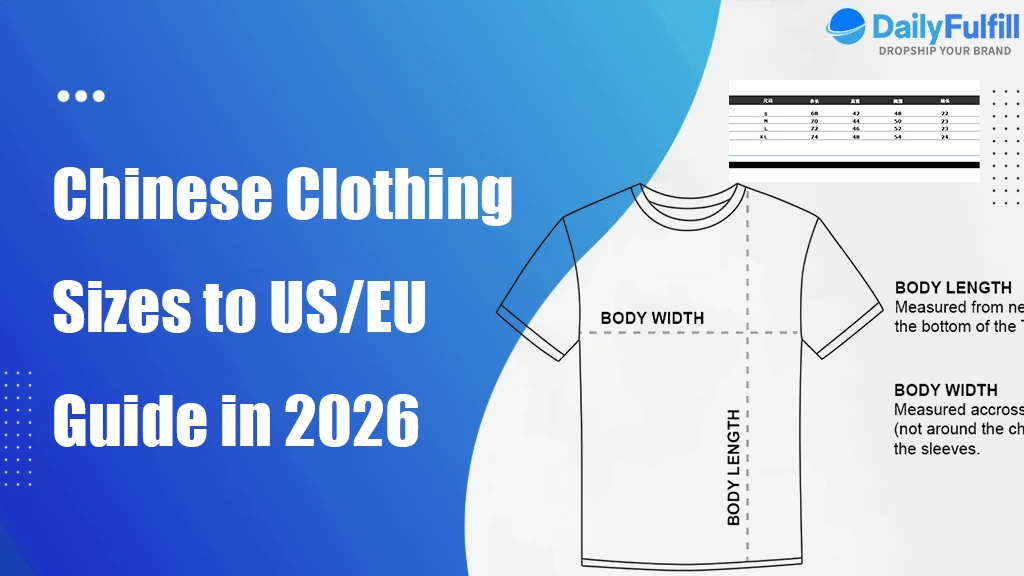
Chinese clothing sizes can cost you refunds. Use our size conversion charts, learn to decode 160/84A supplier tags, and avoid the ‘Free Size’ trap — with tips built for dropshippers and online sellers.