
Chinese Ring Size Chart: US, UK & EU Conversion (2026)
Chinese ring sizes don’t match US, UK, or EU. Use our conversion chart, platform sourcing tips, and dropshipper checklist to get sizes right before orders ship.
Chinese sizes follow different standards than US, EU, or UK sizes — and the differences are bigger than most people expect.
A Chinese “XL” in clothing is often closer to a US Medium. A Chinese shoe labeled “40” may not match a real EU 40. And a Chinese ring size 12 is nowhere near a US 12.
This guide gives you the quick conversion charts for the three categories that cause the most confusion — clothing, shoes, and rings — plus a simple sizing rule for each one so you pick the right size the first time.
Need a deep dive into a specific category? Jump straight to the section you need:
Before looking at any chart, here is the single most important thing to know: Chinese sizes generally run 1 to 2 sizes smaller than US or European sizes.
Here is the quick conversion:
This happens because Chinese clothing is designed around East Asian body measurements, which tend to be slimmer and shorter than Western averages. The same principle applies to shoes (narrower lasts) and rings (different number systems entirely).
The practical takeaway: Never trust the letter or number on the label by itself. Always check the centimeter or millimeter measurements. Each section below shows you exactly how.
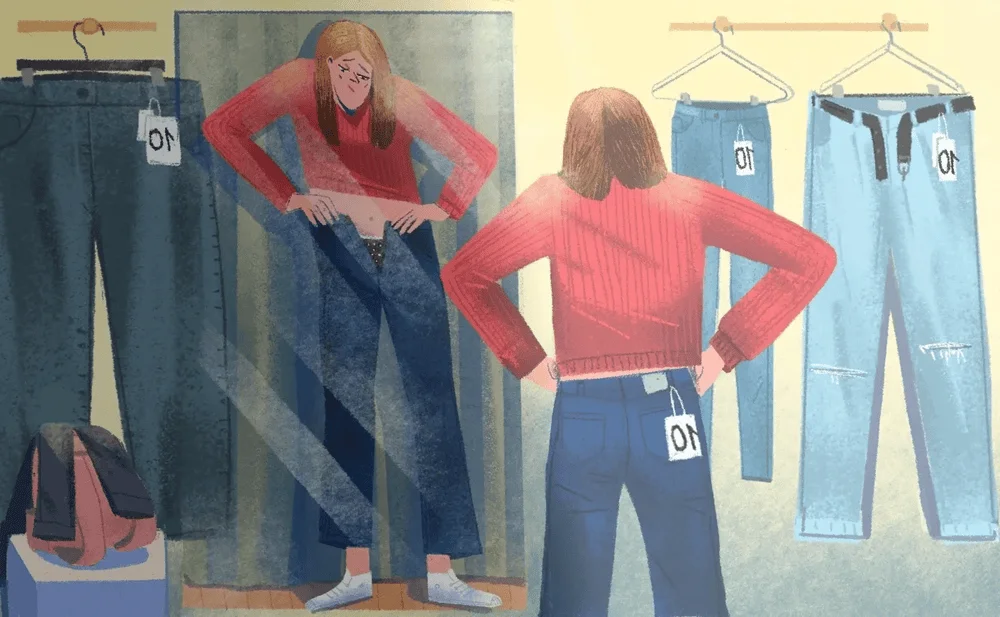
(Note: These are approximations. Always check the specific garment measurements.)
| Chinese Label | US Size | EU Size | Bust (cm) | Waist (cm) |
|---|---|---|---|---|
| S | 0–2 | 32–34 | 78–82 | 62–66 |
| M | 4–6 | 36–38 | 82–86 | 66–70 |
| L | 8–10 | 38–40 | 86–90 | 70–74 |
| XL | 10–12 | 40–42 | 90–94 | 74–78 |
| XXL | 12–14 | 42–44 | 94–98 | 78–82 |

Men’s sizing is tricky because of Shoulder Width. Chinese cuts are often very narrow in the shoulders.
| Chinese Label | US Size | EU Size | Chest (cm) | Waist (cm) |
|---|---|---|---|---|
| S | XS–S | 44–46 | 82–86 | 71–76 |
| M | S–M | 46–48 | 86–90 | 76–81 |
| L | M–L | 48–50 | 90–94 | 81–86 |
| XL | L–XL | 50–52 | 94–98 | 86–91 |
| XXL | XL–XXL | 52–54 | 98–102 | 91–96 |
It’s not just about size — it’s about shape. Chinese garments are cut with narrower shoulders, shorter sleeves, and slimmer torsos compared to Western-fit clothing. Even if you size up for the chest, the shoulders and arms may still feel tight. This is called “Asian Fit.”
Watch out for “Free Size” (均码). On Chinese shopping platforms like 1688 and Taobao, many items are listed as “Free Size” or “One Size Fits All.” In practice, this usually fits a bust range of about 80–88cm — roughly a US XS to M. It does not fit everyone.
Chinese tags use a special code like “160/84A.” The first number is height in cm, the second is bust or waist in cm, and the letter is the body shape. Understanding this system helps you match sizes accurately across different suppliers.
Want the full charts, the 160/84A system explained, Asian Fit vs. Western Fit differences, children’s sizes, and a seller’s sizing checklist?
👉 Read the complete guide: Chinese Clothing Size Charts — Full Conversion & Fit Guide (2026)
| Foot Length (mm) | CN Size (Old) | EU Size | US Men’s | UK |
|---|---|---|---|---|
| 250 | 40 | 40 | 7 | 6.5 |
| 255 | 41 | 40.5 | 7.5 | 7 |
| 260 | 42 | 41.5 | 8 | 7.5 |
| 265 | 43 | 42 | 9 | 8 |
| 270 | 44 | 43 | 9.5 | 8.5 |
| 275 | 45 | 44 | 10 | 9 |
| 280 | 46 | 44.5 | 10.5 | 9.5 |
| Foot Length (mm) | CN Size (Old) | EU Size | US Women’s | UK |
|---|---|---|---|---|
| 225 | 35 | 36 | 5.5 | 3.5 |
| 230 | 36 | 37 | 6 | 4 |
| 235 | 37 | 37.5 | 6.5 | 4.5 |
| 240 | 38 | 38 | 7.5 | 5 |
| 245 | 39 | 39 | 8 | 6 |
| 250 | 40 | 40 | 8.5 | 6.5 |
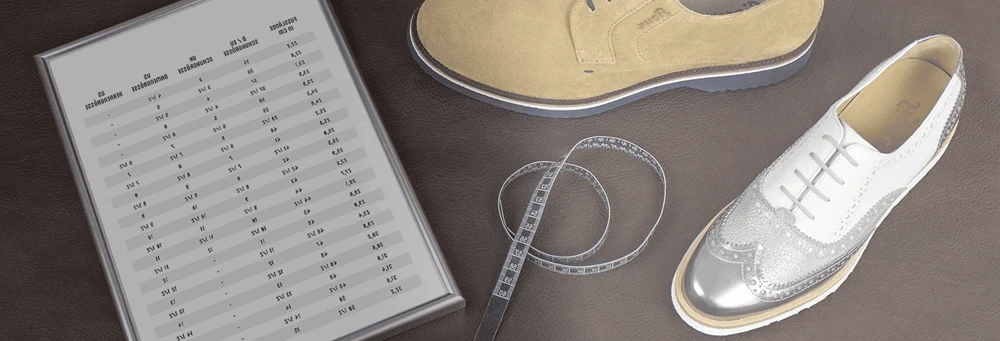
Chinese shoe sizes and EU sizes are NOT the same — even though the numbers look similar. Around size 40 (foot length ~250mm), the two systems happen to align. But at larger sizes, the gap grows fast. An Old Chinese size 44 fits a 270mm foot, while a real EU 44 fits a 280mm foot — that’s a full 10mm difference.
China has two sizing systems. The “Old” system uses numbers like 38, 39, 40 (which look like EU sizes but aren’t calculated the same way). The “New” system (Mondopoint, based on GB/T 3293.1) uses foot length in millimeters — like 250, 260, 270. The most reliable way to find your size is to measure your foot length in mm and match it to the chart.
Width matters too. Many Chinese shoes are built on narrower lasts than Western shoes. Even if the length is right, the shoe may squeeze across the toes. If you have wide feet, consider going up half a size.
For the full Men’s, Women’s, and Kids’ charts, the Old vs. New sizing system explained, a 5-step home measurement guide, and red flags to watch for when buying shoes from China:
👉 Read the complete guide: Chinese Shoe Size to US/EU/UK — Full Charts & Fit Guide (2026)
| Inner Circumference (mm) | China Size | US Size | UK Size | EU Size |
|---|---|---|---|---|
| 49 | 9 | 4¾ | I½ | 49 |
| 51 | 11 | 5½ | K | 51 |
| 52 | 12 | 6 | L | 52 |
| 54 | 14 | 6¾ | M½ | 54 |
| 56 | 16 | 7½ | O | 56 |
| 57 | 17 | 8 | P | 57 |
| 59 | 19 | 8¾ | Q½ | 59 |
| 61 | 21 | 9½ | S | 61 |
| 63 | 23 | 10¼ | T½ | 63 |
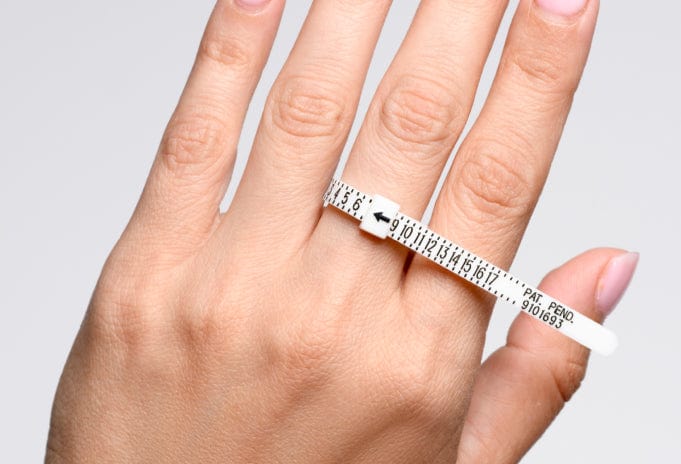
Chinese ring sizes and US sizes use completely different measuring methods. China measures the inner circumference of the ring (the full distance around the inside of the hole). The US measures the inner diameter (the straight line across the hole). This is why the numbers look nothing alike — a Chinese size 17 is a US size 7.
Mainland China sizes and Hong Kong sizes are also different. Many suppliers in Shenzhen and Guangdong use Hong Kong sizing, which can be 1–2 numbers off from the Mainland standard. If you’re ordering from a Chinese supplier, ask which system they use before placing your order.
The easiest home method: the paper strip. Wrap a thin strip of paper around your finger, mark where it overlaps, and measure the length in mm. That number is your inner circumference. Match it directly to the “Inner Circumference” column in the chart above.
For the complete conversion table (all sizes from 46mm to 64mm), the Mainland vs. HK sizing comparison, how to read ring listings on AliExpress / 1688 / Temu / Taobao, and a pre-listing verification checklist:
👉 Read the complete guide: Chinese Ring Size Chart — US, UK & EU Conversion (2026)

The best size chart in the world won’t help if you don’t know your own measurements. Here is a quick guide for each category.
Use a soft measuring tape (the kind tailors use). Measure over thin clothing — not a thick sweater.
Write all numbers down in centimeters. Then compare your numbers to the cm columns on the seller’s chart — not the letter labels like S, M, or L.
For a complete measurement guide including shoulder width, sleeve length, and inseam (plus how to tell the difference between body measurements and garment measurements): Full clothing measurement guide →
Match the final number to the “Foot Length” column in the shoe chart above. For the full step-by-step with tips on width and a printable guide: Full shoe measurement guide →
Paper strip method (no printer needed):
That length is your inner circumference. Find it in the ring chart above for your size. For advanced tips (measuring over knuckles, adjusting for temperature, wide band rings): Full ring measurement guide →
If you sell products sourced from China — on Shopify, Amazon, Etsy, or any other platform — sizing mistakes are one of your most expensive hidden costs.
Wrong sizes lead to returns. Returns lead to negative reviews. And if enough customers file chargebacks through their bank, your Stripe or PayPal account gets flagged — or worse, frozen. For most fashion and accessories dropshippers, sizing is the #1 driver of disputes, ahead of shipping speed and product quality.
Here is what experienced sellers do differently.
Factory size charts are written for the Chinese domestic market. A supplier’s “XL” is based on Chinese body proportions — not American or European. If you paste their chart onto your Shopify store without translating it, your customers will order based on their local expectations and get the wrong fit.
What to do instead: Build your own size chart using the centimeter measurements. Show US, EU, and UK equivalents side by side. Include both cm and inches — your Chinese supplier thinks in cm, but many of your customers think in inches.
There is an important difference. “Body measurements” describe who the garment is designed for (e.g., “fits 96–100cm chest”). “Garment measurements” describe the actual item — laid flat on a table and measured with a tape.
Garment measurements are more precise and more useful. A customer can measure a shirt they already own, compare it to your flat-lay numbers, and know whether the fit will work for them.
When you message your supplier, ask specifically: “Can you send me the garment measurements (成衣尺寸), not the body measurements?”
This is where most solo sellers fail. You can’t personally measure every jacket, ring, and pair of shoes when your supplier is in China and your customers are in the US. That gap — between what the supplier says and what the customer receives — is where the returns happen.
This is what a fulfillment agent is for.
At DailyFulfill, sizing QC is built into our fulfillment process:
No more “this XL fits like a Small” emails. No more chargebacks over sizing. No more ugly grey bags from AliExpress.
Stop losing money on size-related returns. Get a free quote from DailyFulfill →
Here are the most common questions buyers and sellers ask about ring sizes.
Chinese sizes are based on different body measurement standards. Clothing and shoes are designed around East Asian body proportions, which tend to be slimmer, narrower in the shoulders, and shorter in arm/leg length than Western averages. Always compare the centimeter or millimeter measurements — not the letter or number label.
Not exactly. Chinese shoe sizes and EU sizes use different formulas. Around size 40, they happen to be close. But at larger sizes, the gap grows — a Chinese 44 fits a 270mm foot, while a real EU 44 fits a 280mm foot. Measure your foot in mm for the most accurate conversion. See the full shoe chart →
Chinese ring size 12 has an inner circumference of 52mm, which equals approximately a US size 6. Chinese rings are measured by circumference (the distance around the inside of the ring), while US sizes are based on diameter (the distance across). See the full ring chart →
“Free Size” means the garment comes in one single size only — there are no S, M, L, or XL options. Despite the name, it does not fit everyone. In practice, it usually fits about bust 80–88cm / waist 62–70cm, which is roughly US XS to M. If you’re above a US Medium, “Free Size” items are likely to be too small. Learn how to handle Free Size listings →
This is China’s national sizing code (GB/T 1335). The first number (160) is the wearer’s height in cm. The second number (84) is the bust or waist measurement in cm. The letter (A) indicates body shape — A means standard, B means fuller, Y means slimmer. So 160/84A is designed for someone 160cm tall with an 84cm bust and a standard build — roughly a Chinese M or US 4–6. Full explanation →
Three steps: (1) Measure yourself in centimeters or millimeters — don’t guess based on your usual Western size. (2) Compare your measurements to the specific product’s size chart, not a general conversion table. (3) If you’re between two sizes, choose the larger one. Chinese sizes almost always run smaller, so sizing up is the safer bet.
Learn dropshipping tips, sourcing strategies and fulfillment insights from DailyFulfill
Chinese ring sizes don’t match US, UK, or EU. Use our conversion chart, platform sourcing tips, and dropshipper checklist to get sizes right before orders ship.
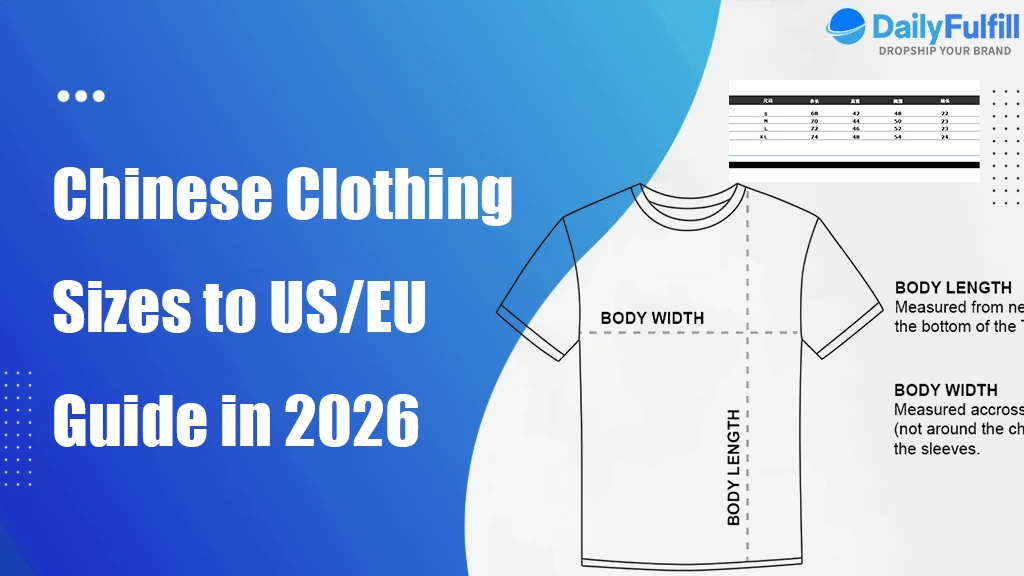
Chinese clothing sizes can cost you refunds. Use our size conversion charts, learn to decode 160/84A supplier tags, and avoid the ‘Free Size’ trap — with tips built for dropshippers and online sellers.
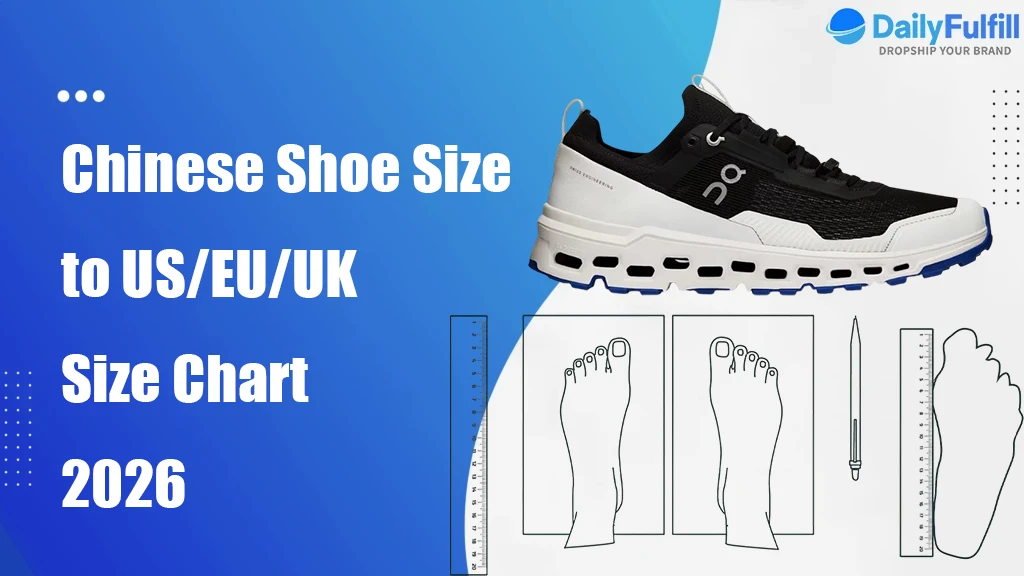
Convert Chinese shoe sizes to US, EU & UK with formula-verified charts for men, women & kids. Learn why CN ≠ EU, how to measure your feet, and what to ask the seller before you buy. Based on GB/T 3293.1 & ISO 9407